iPod's 25th Anniversary Marks Digital Shift
Two decades and a half after its launch, the original iPod remains a pivotal moment in portable audio history.
By Jayden Sweiler ·
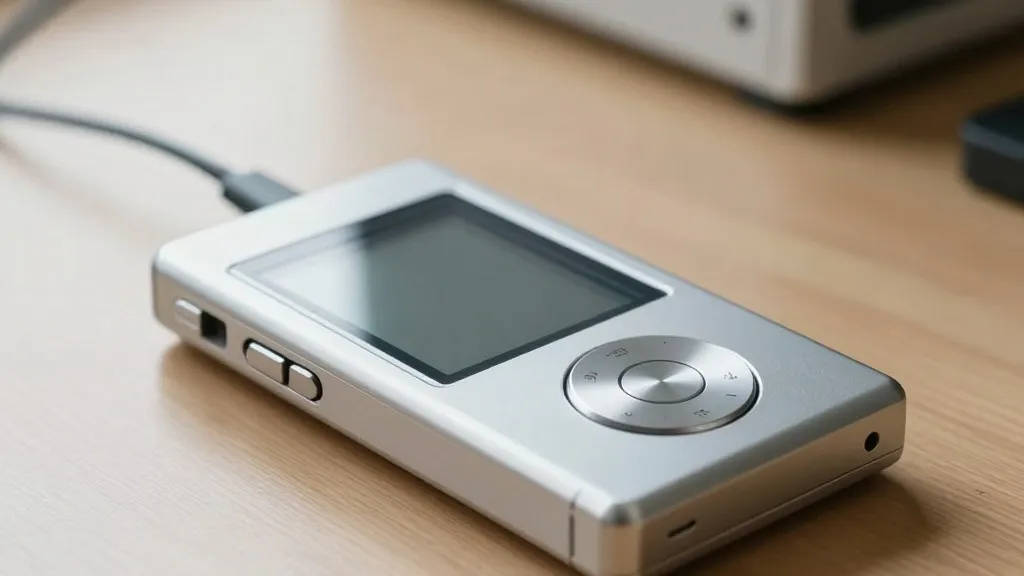
On October 23, 2001, Apple CEO Steve Jobs revealed a device that would fundamentally alter how consumers interacted with music. Priced at $399, the original iPod offered five gigabytes of storage, allowing users to carry 1,000 songs in a form factor comparable to a deck of cards. This specific combination of capacity and portability was the defining characteristic of the launch, positioning the device as a viable replacement for existing portable players.
The unveiling occurred during a period of strategic transition for Apple. Having successfully moved the company beyond its earlier beige aesthetic into the Mac OS X era, the firm was experiencing a financial revival shortly after the dot-com bubble burst. Jobs envisioned the Mac as the central hub for a user's digital lifestyle, connecting cameras, camcorders, and DVD players. He identified portable music as a massive, leaderless market, noting that while competitors like Sony and Creative had products, none had found the correct formula for digital music.
At the time, the market was segmented into CD players, MP3 CD players, flash-based devices, and hard-disk jukeboxes. Apple selected the hard-disk approach for its entry into the space. The resulting device supported standard audio formats such as MP3, WAV, and AIFF with CD-quality sound. The specific capacity claim of 1,000 songs referred to typical pop tracks encoded at 160Kbps, a figure Jobs argued represented the entire library for most consumers.
The physical design relied on a 1.8-inch, 0.2-inch thick hard drive manufactured by Toshiba. This component allowed the iPod to measure 2.4 by 4 by 0.78 inches and weigh just 6.5 ounces, a weight Jobs noted was lighter than many contemporary cell phones. Connectivity was handled via a single FireWire 400 cable, which served both for charging and data transfer. Apple claimed this connection could transfer an entire CD of music in five to 10 seconds, a significant improvement over USB connections of the era, which reportedly took around five minutes for the same task.
Power was managed by a rechargeable lithium-polymer battery capable of 10 hours of continuous playback. Apple stated that an empty battery could reach 80% charge in one hour. The user interface featured a piezoelectric clicker for tactile feedback, enabling one-handed operation. The first track demoed on stage during the presentation was 'Building a Mystery' by Sarah MacLachlan.
The launch was synchronized with the release of iTunes 2, which introduced Auto-Sync functionality. This feature ensured that music libraries curated on a Mac remained automatically updated on the portable device upon connection. The iPod also functioned as an external FireWire hard drive. Although the iPhone arrived in early 2007, the iPod line persisted until the 7th-generation iPod Touch in May 2019, with official discontinuation occurring in May 2022.
Source: Tom's Hardware