SpaceX Shares Surge After Record Quarter
Investors rallied behind SpaceX following a strong earnings report that highlighted massive growth in its AI and satellite divisions.
By Tunde Adeyemi ·
For individuals following the stock market, the landscape for SpaceX (NASDAQ: SPCX) shifted dramatically this week. Following the release of its third-quarter financial results on the evening of October 20, 2026, the company’s shares experienced a sharp increase. By the early premarket trading session on October 21, the stock had climbed approximately 8 percent, moving away from its previous close of $147.79. This reaction reflects a sudden surge in investor confidence as the market digests the company’s latest performance metrics and forward-looking guidance.
The core of the positive sentiment stems from a financial report that significantly outperformed expectations. SpaceX reported total revenue of $14.6 billion for the quarter, marking a 161 percent year-over-year increase. This figure comfortably exceeded the consensus estimate, which analysts had projected at approximately $12.7 billion. Furthermore, the company transitioned from a loss in the same period last year to a net profit of $4.4 billion. Adjusted EBITDA also reached a substantial $8.8 billion, indicating improved operational efficiency and profitability across the business.
A primary driver of this financial success was the rapid expansion of SpaceX’s Super Intelligence division, which focuses on artificial intelligence. This segment generated roughly $7.6 billion in revenue, making it the largest contributor to the company’s total income. The growth in this area was nearly 830 percent compared to the previous year. Simultaneously, the Connectivity segment, which includes the Starlink satellite internet service, delivered $5.2 billion in revenue. The consumer base for Starlink expanded to 13.6 million subscribers, driven by strong additions in new users.
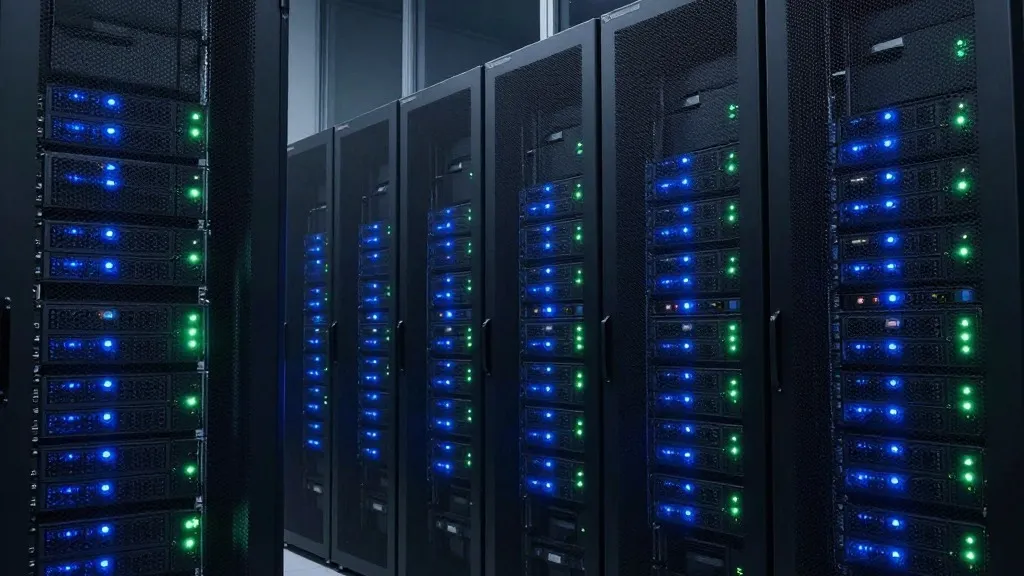
The earnings call proved to be a critical moment for market perception, as CEO Elon Musk and CFO Bret Johnsen provided detailed outlooks for the coming year. Management outlined revenue guidance for the first quarter of 2027 ranging from $33 billion to $37 billion. This projection was significantly higher than the roughly $22 billion that analysts had previously modeled. The company also announced plans for fourth-quarter capital expenditures between $35 billion and $40 billion, with a specific focus on expanding AI compute infrastructure. Major expansion sites for this infrastructure include locations in Memphis and Southaven.
Management set ambitious targets for its compute capacity, aiming for 2.5 to 3 gigawatts of nameplate capacity by the end of the current year. They discussed potential pathways to reach 13 gigawatts or more by the end of 2027. Musk noted that demand from large-scale customers, or hyperscalers, remains intense. He indicated that current compute pricing supports very short payback periods for this infrastructure, potentially as low as six months, which suggests high return on investment for these new data centers.
Beyond financials, the company highlighted several strategic milestones that bolstered its long-term growth narrative. These included recent orbital successes with the Starship vehicle and the deployment of V3 satellites. The company also pointed to momentum in Starlink enterprise pricing and the rapid adoption of its Grok Bot. Additionally, management mentioned plans for spectrum expansion and the formation of special committees to explore a possible corporate combination with Tesla.
In response to these developments, Wall Street analysts quickly adjusted their valuations for the stock. JPMorgan more than doubled its price target to $500 from $240, maintaining an Overweight rating. Other major firms also raised their targets, with Cantor Fitzgerald lifting its to $345 from $246 and Barclays raising its to $300 from $254. Citi increased its target to $240 from $200, while UBS moved its to $230 from $210. TD Cowen raised its target to $224 from $200, and Morgan Stanley maintained an Overweight rating with a $300 target.
Additional adjustments came from Wells Fargo, which raised its target to $274 from $214, and Clear Street, which moved its to $248 from $217. Analysts broadly cited the strong quarterly performance, accelerating AI compute expansion, and progress in the Starlink and Starship programs as key drivers for higher long-term growth. The average analyst price target has moved higher, reflecting greater conviction in SpaceX’s trajectory across its launch, connectivity, and AI businesses, although the elevated level of spending remains a point of focus for investors.
Source: Teslarati