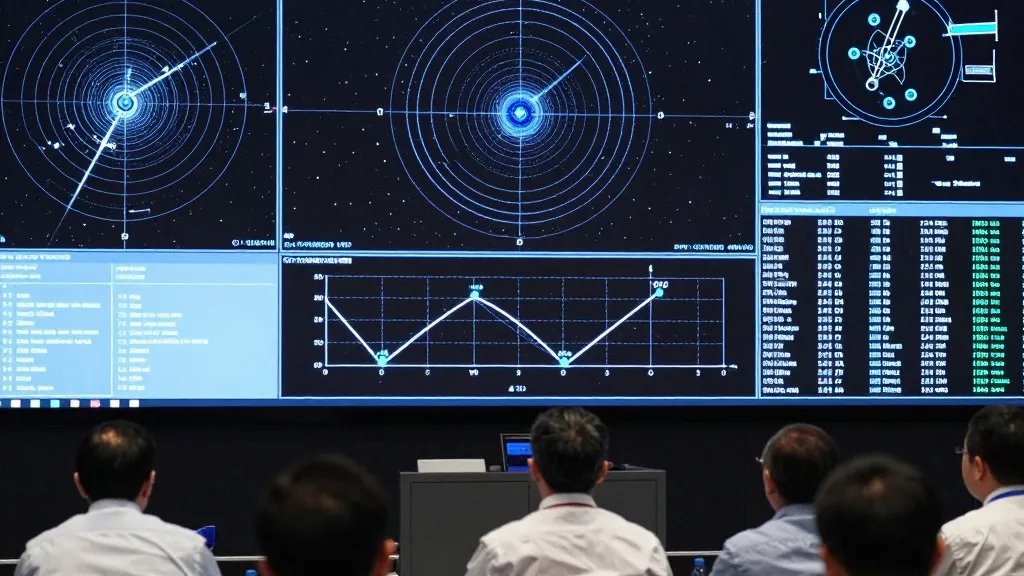
Launch Economics: SpaceX Declines Military Contracts Amidst Funding Pushes
While SpaceX turns down three Space Force deals, European and Canadian startups ramp up capital and manufacturing for next-generation orbital vehicles.
By Thomas Reynolds ·
The commercial space sector is seeing a distinct divergence in strategy this week, with one major player scaling back its military involvement while others accelerate their capital-intensive development phases.
In a notable shift for the industry’s dominant force, SpaceX has formally declined three launch contract opportunities presented by the United States Space Force. This decision, reported this week, signals a potential recalibration in how the company allocates its launch capacity between government mandates and its own commercial ambitions. By saying no to these specific military payloads, the company is maintaining a tighter control over its launch cadence, a move that could have downstream effects on the pricing and availability of orbital access for other providers.
Concurrently, the financial implications for SpaceX’s flagship Starship program have been brought into sharper focus by a recent safety review. A NASA panel indicated that a lunar landing mission supported by Starship may require as many as 22 on-orbit refueling operations. This high number of required transfers underscores the complexity of the logistics chain and suggests that the path to a sustainable lunar economy will depend heavily on the reliability and efficiency of in-space propellant transfer technologies, a critical bottleneck for long-term profitability in deep space operations.
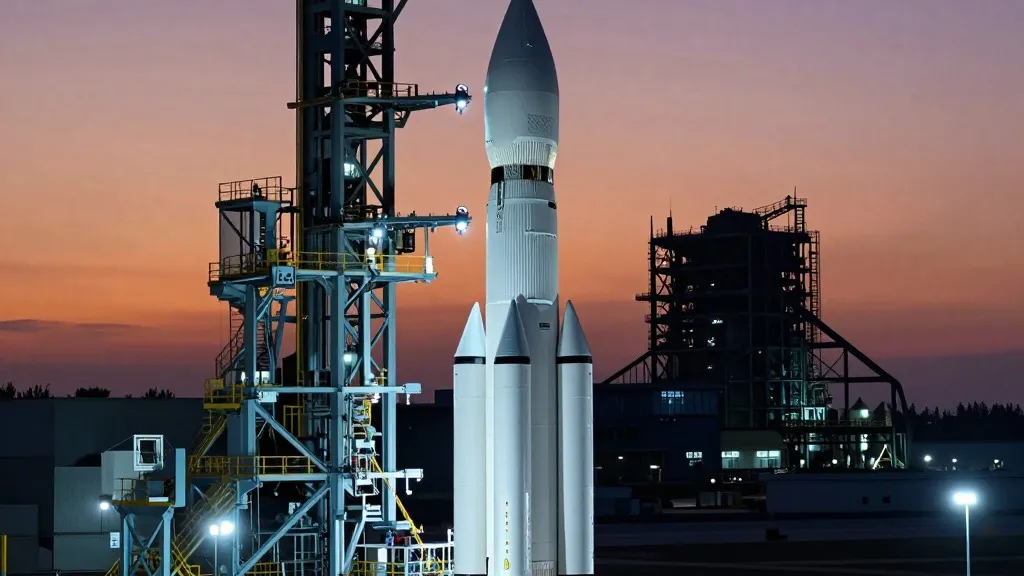
While the American giant navigates these strategic choices, European competitors are closing in on their own milestones. PLD Space, a company based in Spain, has announced that its Miura 5 rocket is nearing final integration ahead of its inaugural flight. The company aims to conduct its first launch before the midpoint of 2027. This small-lift vehicle represents a significant step for the European market, potentially offering a competitive alternative for payloads that are too large for micro-launchers but do not require heavy-lift capability.
CEO Raúl Torres confirmed in an October program update that three Miura 5 vehicles have already been manufactured. Two of these were dedicated to qualifying key system elements, while the third is being prepared for the actual launch. Torres noted that the continuous production process allowed their teams to apply lessons learned from each qualification campaign directly to the launch vehicle, a cost-effective strategy that minimizes rework and accelerates the timeline to market entry.
Specific progress on the Miura 5’s second stage has also been detailed. One unit is now fully integrated and has begun system-level testing under representative operating conditions. Currently located at PLD’s test facility in Teruel, the stage is undergoing a qualification campaign that includes a wet dress rehearsal and a static hot-fire test. These rigorous physical tests are essential for validating the structural and propulsion integrity of the rocket, ensuring that the company can meet its 2027 launch target without significant delays.
Across the Atlantic, the Canadian launch startup Reaction Dynamics is aggressively pursuing capital to expand its workforce and infrastructure. The company is seeking to raise $350 million, a figure that would allow it to grow its staff from the current 68 employees to more than 350. This substantial hiring push indicates a transition from the early development phase to full-scale production, a critical juncture for any aerospace startup aiming to compete in the global launch market.
Reaction Dynamics is developing the Aurora, a small-lift rocket targeted for an orbital debut in 2028. Beyond this initial vehicle, the company has outlined plans to build a medium-lift rocket named Borealis, with a debut scheduled by 2031. This two-pronged approach allows the company to capture different segments of the launch market, starting with smaller payloads and scaling up to heavier loads as its technology matures and its customer base expands.
The convergence of these developments, SpaceX’s selective contracting, PLD Space’s manufacturing progress, and Reaction Dynamics’ fundraising efforts, illustrates a maturing global market. Investors and customers are increasingly looking at the balance between established players and emerging competitors, with the latter focusing heavily on cost efficiency and rapid iteration to secure their place in the orbital economy.
Source: Ars Technica