Federal Regulators Mandate Cyan Lighting for Autonomous Vehicles
The National Highway Traffic Safety Administration is proposing a national standard for blue-green lights to distinguish self-driving cars from traditional traffic.
By Valentina Cruz ·
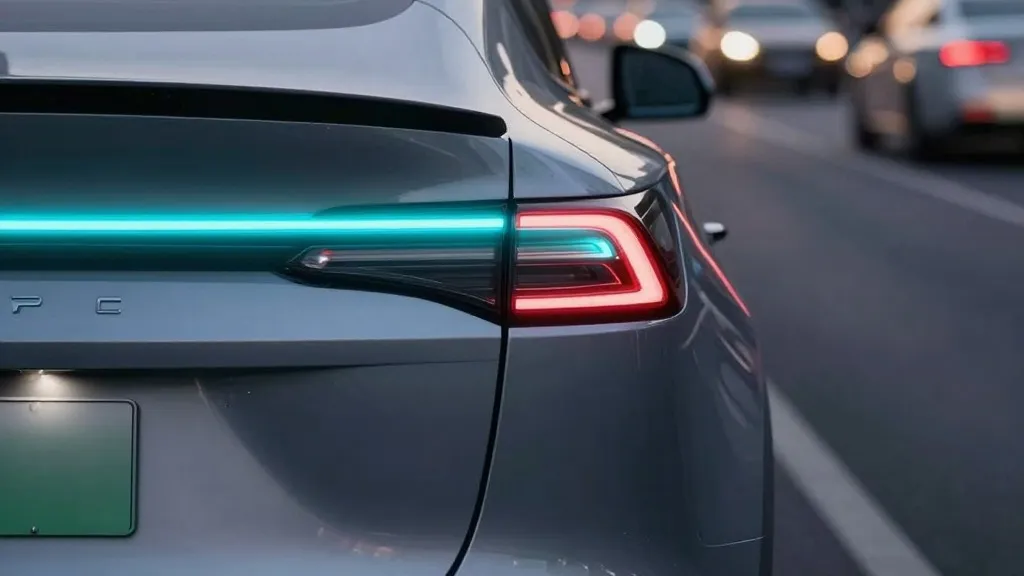
For years, the automotive industry and regulators have clashed over how driverless vehicles should visually announce their status to the public. While manufacturers experimented with various signals, federal authorities have now intervened to establish a single, uniform standard. The core of this new approach is a specific blue-green hue, or cyan, which the government intends to use as a universal indicator that no human is at the wheel.
The National Highway Traffic Safety Administration (NHTSA) released proposed amendments to Federal Motor Vehicle Safety Standard No. 108. This update specifically targets the lighting requirements for vehicles, aiming to adapt existing rules for autonomous technology. The agency seeks to clarify how robotaxis communicate with surrounding traffic and law enforcement, moving away from the inconsistent signals currently being tested by different companies.
The choice of cyan is driven by practical necessity. Current automotive lighting standards reserve red, amber, and white for standard functions like braking and signaling, while flashing blue and red lights are typically associated with emergency vehicles. By selecting a color that is distinct from these established categories, NHTSA aims to fill a visual gap. This ensures that road users can quickly identify an automated vehicle without confusion or hesitation.
There is already a precedent for this type of signaling. Mercedes-Benz previously received state-level approval to use turquoise lights for its Level 3 Drive Pilot vehicles. Although the automaker later moved toward a Level 2++ system, the success of that pilot program informed the federal proposal. NHTSA intends to create a national baseline that operators like Waymo, Nuro, and Zoox, along with automakers such as GM and Mercedes, can adopt uniformly.
Under the proposed rule, the installation of cyan marker lights would remain optional for manufacturers. However, the agency is establishing strict federal standards for the color, brightness, and physical location of these lamps. This regulatory framework ensures that if an automaker chooses to include the lights, they will follow a consistent, legal configuration rather than creating a fragmented landscape of differing signals.
Alongside the new lighting standard, NHTSA is proposing to remove several requirements that are illogical for vehicles without human drivers. Current regulations mandate the presence of physical hazard switches, manual beam shifters, and turn levers inside the cabin. The agency suggests eliminating these mandates, as they serve little purpose in fully automated systems. Additionally, the proposal updates the 12.8-volt testing standard to accommodate modern LED architectures, reducing administrative burdens for manufacturers.
NHTSA is also reconsidering rules that dictate the relative positioning of high-beam and low-beam lights. By relaxing these structural requirements, the agency aims to give engineers more freedom in designing lighting systems that fit the specific needs of autonomous platforms. This is part of a broader administrative push by the Department of Transportation to streamline the deployment of automated vehicles and facilitate the creation of cars that may lack traditional controls like steering wheels and pedals.
Despite these efforts to simplify regulations, the agency is also actively enforcing existing rules. Last month, NHTSA opened an audit query into the Tesla Cybercab. The review examines the technical data and processes Tesla used to certify the vehicle. The primary concern is the absence of certain design features, including sideview mirrors, pedals, and a steering wheel, which are currently required under FMVSS. This dual approach highlights the tension between modernizing standards for new technology and maintaining strict oversight of current compliance.
The finalization of these rules will determine the visual language of the autonomous vehicle era. By standardizing the cyan signal and removing obsolete hardware requirements, NHTSA aims to create a smoother path for robotaxis to integrate into daily traffic. The outcome will shape how millions of drivers in Texas and across the South Central states interact with driverless cars in the coming years.
Source: The Verge